Best suburbs to invest in Newcastle and the Central Coast in 2026

Key takeaways
- The picks: Ten suburbs across Newcastle's inner west, Lake Macquarie and the Central Coast make this year's list, with house medians ranging from $920,000 to $1,815,500 and unit medians from $660,000 to $845,000.
- Who they suit: Investors focused on capital growth rather than income, though Jesmond stands out for yield-driven buyers seeking a lower entry price.
- Market conditions: The corridor rose +9.2 per cent over the year to June 2026 before dipping -0.2 per cent in May, with vacancy near 1 per cent keeping the rental market firmly in landlords' favour.
- The forecast: Analysts tip +3 to +7 per cent growth for Newcastle and Lake Macquarie through 2026, though the May softening puts the balance of risk toward the lower end.
- The trade-off: Yields across most picks are thin, so the investment case rests on prices continuing to grow rather than rent covering the costs of owning.
Why invest in Newcastle and the Central Coast now?
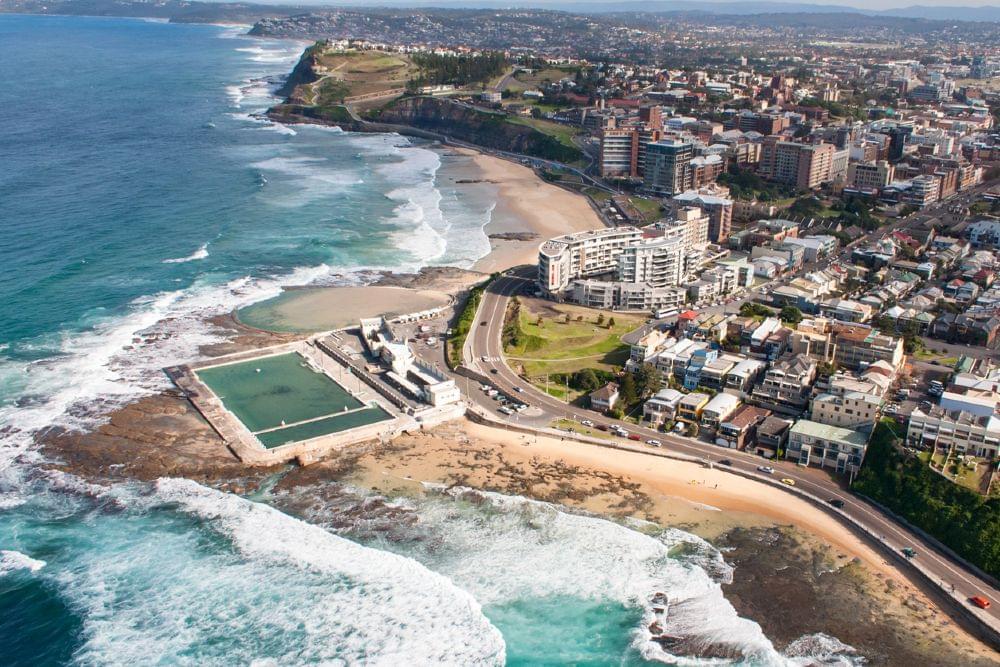
The Newcastle–Central Coast corridor doesn't make the same headlines as Sydney, but that's part of what makes it worth looking at. Growth has slowed from the pace of 2025, and that cooling is precisely where the opportunity sits for investors who are prepared to move carefully.
Cotality data put Newcastle and Lake Macquarie dwelling values up +9.2 per cent over the year to June 2026, though the region peaked in April before slipping -0.2 per cent in May. Prices here have still outpaced Sydney, which has been in outright decline through the first half of 2026.
Supply is thin: advertised stock sits well below the five-year average in Newcastle–Lake Macquarie, and new building approvals remain below 1 per cent of stock. A steady flow of buyers from Sydney, drawn by relative affordability and rail access, keeps demand from falling away.
The infrastructure pipeline adds weight. The NSW Government has committed roughly $890 million to the John Hunter Health and Innovation Precinct, due for completion in 2026, alongside $14 million in the 2026 NSW Budget for the Broadmeadow Precinct. Roughly $161 million of project works are set to begin in the Central Coast's 2251 postcode this year, according to Savings.com.au.
Rental conditions are tight. Vacancy sits near 1 per cent in Newcastle and the Hunter, and at or below 0.5 per cent on parts of the Central Coast, according to InvestorKit. That means finding a tenant is rarely the problem here. Gross yields for houses in Newcastle and Lake Macquarie run around 3.8 per cent, per InvestorKit, with units offering more.
Buyer sentiment has cooled but not collapsed. Cohen Handler describes a two-tier market: under $1.5 million it is competitive and fast-moving, while above $2 million there is genuine room to negotiate. Interest rates and cost-of-living pressure remain the main drag on borrowing capacity, and both weighed on the May figures.
If you are sizing up a suburb on this list, a free property report gives you recent comparable sales, suburb statistics, average days on market and an estimated value, at no cost and with no obligation.
Newcastle and Central Coast property market predictions and price forecasts 2026
Newcastle & Central Coast property market predictions for 2026 point to modest growth, though the forecasts predate the region's May value dip and should be read carefully. Cohen Handler buyer's agent Jackson Morgan tips Newcastle and Lake Macquarie dwellings to grow +3 to +7 per cent through 2026, with gains expected to accelerate over the following two to three years as supply stays constrained. For the Central Coast, Bryson Buyers Agents has flagged a similar range of roughly +3 to +6 per cent.
The region peaked around April 2026 and turned marginally negative in May, so the balance of risk sits toward the lower end of both ranges.
Interest rates are the main drag. All four major banks expect their next move to be a cut to 4.1 per cent, though none expect it before mid-2027, according to Canstar's big-four tracker. Until borrowing costs ease, serviceability will keep a ceiling on how far prices can run.
As context, Sydney dwelling values are forecast to fall in 2026 by -9.9 per cent on ANZ's figures and -6 per cent on CBA's Housing Update. That is a reminder that the wider NSW market is under genuine pressure even as the Newcastle and Central Coast corridor continues to outperform.
Whether you are still weighing suburbs or ready to move, seeing what is available before it hits the portals matters in a market this competitive. OpenAdvantage is OpenAgent's buyer network: it gives you early access to thousands of off-market properties, homes whose owners are ready to sell but have not yet listed publicly, at no cost.

How we chose the best suburbs in Newcastle & Central Coast
OpenAgent's data team ranks suburbs using a growth-led scoring model built on sales and rental records. Recent and longer-term price growth, over 12 months and five years, does most of the work, with days on market, listings volume and rental yield each contributing a smaller amount.
The rankings use sales and rental data for the 12 months to 30 June 2026. Growth figures compare that period with the previous 12 months and the equivalent period five years earlier. Each suburb is ranked on its stronger property type, house or unit.
The gross rental yield is an estimate based on all properties in a suburb, not only rented ones. Suburbs with fewer than about 20 sales are excluded, and some datapoints are omitted where data is too limited to be reliable.
General information only, not financial advice. Figures are estimates and past performance is not a reliable indicator of future results. Always seek independent advice.
Newcastle & Central Coast's best suburbs to invest in 2026
Ten suburbs make this list, six houses and four units. Each is profiled individually after the comparison table. Across the picks, the strongest twelve-month growth tends to come with thinner yields, while the better-yielding picks have seen more modest price gains.
| Suburb | Postcode | Type | Median price | 12m growth | 5y growth | Median rent (pw) | Gross yield |
|---|---|---|---|---|---|---|---|
| Waratah | 2298 | Unit | $739,000 | +27.4% | +68.9% | $493 | 3.5% |
| Birmingham Gardens | 2287 | House | $920,000 | +23.5% | +77.6% | $650 | 3.8% |
| Teralba | 2284 | House | $1,125,000 | +17.8% | +64.2% | $800 | 3.7% |
| Ourimbah | 2258 | House | $1,160,000 | +28.9% | +38.9% | $650 | 3.1% |
| Mayfield West | 2304 | House | $1,022,500 | +22.5% | +54.3% | $720 | 3.7% |
| Mount Hutton | 2290 | Unit | $770,000 | +17.8% | +58.1% | na | na |
| Long Jetty | 2261 | Unit | $845,000 | +17.4% | +61% | $525 | 3.8% |
| Cooks Hill | 2300 | House | $1,815,500 | +22% | +54.5% | $750 | 2.4% |
| Jesmond | 2299 | Unit | $660,000 | +17.5% | +58.3% | $520 | 5.1% |
| Adamstown Heights | 2289 | House | $1,320,000 | +17.3% | +56.2% | $790 | 3.1% |
Source: OpenAgent data.

1. Waratah 2298
Waratah is a working suburb about three kilometres west of Newcastle's CBD, close to the John Hunter Hospital precinct and well connected to the city centre. Units here rose +27.4 per cent over the past year to a median of $739,000, the strongest twelve-month growth of the four unit picks, and homes are selling in 19 days, down from 28 a year ago, meaning they are moving meaningfully faster than they were twelve months back.
The gross yield is 3.5 per cent. Fewer than 20 units typically change hands in a year, so a small number of sales can move the median meaningfully in either direction.
- Strengths: Exceptional recent price growth, close to a major hospital precinct and the CBD, with homes selling very quickly.
- Risks and considerations: A small, thinly traded market where one atypical sale can shift the median.
- Best suited for: Growth-focused investors who can accept thin liquidity and a modest income return.
2. Birmingham Gardens 2287
Birmingham Gardens is a quiet residential suburb in the Lake Macquarie catchment, about 12 kilometres south-west of Newcastle's centre, with a mix of family homes on generous blocks. It carries the lowest entry price of the six house picks at $920,000, yet its five-year growth of +77.6 per cent is the strongest of the ten picks.
The twelve-month gain of +23.5 per cent is strong, and homes are selling in 20 days. Listings rose +32.4 per cent over the past year, which gives buyers more choice and some room to negotiate, but also means more competition when it comes time to sell.
- Strengths: Outstanding long-run price growth, combined with the most accessible entry point of the house picks.
- Risks and considerations: Rising supply means more choice for buyers now but a more competitive resale environment later.
- Best suited for: Long-hold investors who want meaningful capital growth without a premium entry price.
3. Teralba 2284
Teralba sits on a narrow peninsula jutting into Lake Macquarie, about 20 kilometres south of Newcastle, where the water-adjacent lifestyle is the drawcard. Homes rose +17.8 per cent over the past year to a median of $1,125,000, and selling pace has tightened sharply: days on market fell from 38 to 28, the longest of the ten picks but meaningfully faster than a year ago.
A median rent of $800 per week is the highest of the nine picks with a figure, supporting a gross yield of 3.7 per cent. That rental income is a genuine positive at this price point. A prior-year listings comparison is unavailable, so the supply trend cannot be confirmed.
- Strengths: Strong rental income relative to the rest of the list, in a distinctive lakeside location with consistent lifestyle appeal.
- Risks and considerations: Homes take longer to sell here than anywhere else on the list, and supply trends are unclear without a prior-year comparison.
- Best suited for: Investors who want a balance of income and growth and are comfortable with a longer resale timeline.
4. Ourimbah 2258
Ourimbah is a Central Coast suburb about 75 kilometres south of Newcastle and roughly 80 kilometres north of Sydney, sitting between the M1 motorway and bushland, with a university campus adding a steady renter base. House prices rose +28.9 per cent over the past year to a median of $1,160,000, the strongest twelve-month growth of the ten picks.
The five-year gain of +38.9 per cent is the weakest five-year growth of the ten picks, which means most of the momentum is recent. The gross yield of 3.1 per cent is the thinnest of the house picks, meaning the rent will not do much to cover the costs of owning, and listings rose +16.7 per cent over the past year.
- Strengths: Exceptional recent price growth, in a well-connected Central Coast location with a built-in renter base.
- Risks and considerations: Thin yield and a limited long-run growth record mean this pick relies on recent momentum continuing.
- Best suited for: Growth-focused investors comfortable with a lower income return and a shorter track record.
5. Mayfield West 2304
Mayfield West is an established inner suburb about five kilometres north-west of Newcastle's CBD, close to the Hunter Expressway and within reach of the Mayfield industrial and logistics corridor. Prices rose +22.5 per cent over the past year to a median of $1,022,500, and homes are selling in 22 days, down sharply from 31 a year ago, so buyers are moving quickly.
Listings fell -28.6 per cent over the past year, the smallest of the six house picks by volume. That keeps supply tight, but fewer sales also means fewer comparable transactions to judge the market by. Gross yield sits at 3.7 per cent on a median rent of $720 per week.
- Strengths: Strong price growth and quickly tightening selling conditions, close to employment and freight infrastructure.
- Risks and considerations: Very few properties trade here, so the median can move significantly on a handful of sales.
- Best suited for: Growth-focused investors who want city-fringe proximity and can accept a shallow resale market.

Get a free property value estimate
Find out how much your property is worth in today’s market.
6. Mount Hutton 2290
Mount Hutton is a Lake Macquarie suburb about 15 kilometres south-west of Newcastle, a suburban catchment of family homes close to Charlestown's retail and commercial hub. Units rose +17.8 per cent over the past year to a median of $770,000, and selling pace has moved sharply: days on market fell from 39.5 to 19, meaning units here are now changing hands in under three weeks.
Rental and yield data are unavailable for this pick. That is a meaningful gap: without an income figure, it is hard to weigh what the entry price is actually costing you to hold.
- Strengths: Very strong improvement in selling pace, in a well-serviced suburb with good access to Lake Macquarie's retail catchment.
- Risks and considerations: No rental or yield data is available, making it difficult to assess income return before committing.
- Best suited for: Growth-focused investors who are comfortable doing additional rental research before buying.
Get a free property report to check recent comparable sales and suburb statistics for any of these suburbs before you act.
7. Long Jetty 2261
Long Jetty sits on a narrow strip of the Central Coast between Tuggerah Lake and the Pacific Ocean, about 90 kilometres north of Sydney. The median unit price rose +17.4 per cent over the past year to $845,000, the highest of the four unit picks, and homes are selling in 22 days, half the time they took a year ago.
The gross yield of 3.8 per cent on a median rent of $525 per week is the highest median rent of the three unit picks with a figure. That income holds up reasonably well, though at this entry price the rent is unlikely to cover all the costs of owning, so this investment depends partly on prices continuing to grow.
- Strengths: Strong lifestyle appeal with both lake and ocean access, and a rental market that holds up well on income.
- Risks and considerations: A demanding entry price narrows the pool of future buyers and limits who can access this market.
- Best suited for: Investors seeking a balance of lifestyle-driven capital growth and reasonable rental income at the upper end of the unit budget.
8. Cooks Hill 2300
Cooks Hill is one of Newcastle's most sought-after inner suburbs, a leafy enclave of heritage cottages and Federation homes a short walk from Darby Street's cafes and the city's beaches. The median price rose +22 per cent over the past year to $1,815,500, the highest of the ten picks, and homes are now selling in 26.5 days, down from 41 a year ago.
The gross yield of 2.4 per cent is the lowest of the nine picks with a figure. At that level the rent covers only a fraction of what it costs to own here, so the investment stands or falls on capital growth. Listings fell -32.7 per cent over the past year, meaning very few properties trade in any given year.
- Strengths: Prestige inner-city location with genuine lifestyle appeal, strong price growth and rapidly tightening selling conditions.
- Risks and considerations: A very thin rental income against a demanding entry price means this investment relies heavily on continued capital growth.
- Best suited for: High-budget, growth-focused investors with the capacity to carry a low income return over a long hold.
9. Jesmond 2299
Jesmond sits next to the University of Newcastle campus, about five kilometres north-west of the city centre, and that proximity keeps the rental market consistently active. The median unit price rose +17.5 per cent over the past year to $660,000, the lowest entry price of the ten picks, and a gross yield of 5.1 per cent is the highest of the nine picks with a figure.
Days on market fell from 33 to 24, and listings held flat year on year. The trade-off is that demand here is mostly student-driven, which tends to mean higher tenant turnover and more hands-on property management than a typical residential investment.
- Strengths: Reliable university-driven tenant demand keeps occupancy steady and the rental income strong.
- Risks and considerations: Heavy reliance on the student rental market can mean higher tenant turnover and more active property management.
- Best suited for: Yield-focused investors comfortable with student tenancies who want a lower-cost entry into the Newcastle market.
10. Adamstown Heights 2289
Adamstown Heights is an elevated suburb in Newcastle's inner west, known for its ridge-top views and larger-than-average blocks, sitting about six kilometres from the CBD and close to major retail at Kotara. House prices rose +17.3 per cent over the past year to a median of $1,320,000, the weakest of the six house picks, and homes are taking 26 days to sell, roughly in line with a year ago.
Listings rose +8.1 per cent over the past year, the largest of the ten picks, which gives buyers genuine choice and negotiating room. The gross yield is 3.1 per cent on a median rent of $790 per week.
- Strengths: Established, well-regarded suburb with strong lifestyle appeal, meaningful buyer depth and good access to the city.
- Risks and considerations: Modest recent growth relative to the other house picks, and the most stock to compete against at resale.
- Best suited for: Investors prioritising suburb quality and liquidity over short-term growth momentum, suited to a patient, long-hold strategy.
The bottom line
Newcastle and the Central Coast have held up better than Sydney in 2026, though the May dip is a reminder that the growth run is not one-way. Analysts tip +3 to +7 per cent for Newcastle and a similar range for the Central Coast, with the balance of risk at the lower end given recent softening.
The suburbs that screened best pair solid long-term growth records with tight rental markets, and several carry entry prices that remain accessible relative to Sydney.
Explore suburb profiles to dig into prices, rents and market activity before you commit.
Is Newcastle and the Central Coast a good place to invest in 2026?
The corridor has outperformed Sydney through the first half of 2026, with Newcastle and Lake Macquarie dwelling values up +9.2 per cent over the year on Cotality's figures, even as Sydney fell. Growth has slowed from its 2025 pace, and the region dipped slightly in May, so this is not a market running hot. The case rests on chronic undersupply, continued population inflow from Sydney, and a large infrastructure pipeline, rather than any prediction that prices are about to lift again.
 - https://sketch.com --%3e %3ctitle%3eicons / icon-chevron-down%3c/title%3e %3cdesc%3eCreated with Sketch.%3c/desc%3e %3cg id='icons-/-icon-chevron-down' stroke='none' stroke-width='1' fill='none' fill-rule='evenodd'%3e %3crect id='Icon-container' x='0' y='0' width='24' height='24'%3e%3c/rect%3e %3cpolygon id='Shape' fill='%2300AB55' points='12 14.3357864 5.20710678 7.54289322 3.79289322 8.95710678 12 17.1642136 20.2071068 8.95710678 18.7928932 7.54289322'%3e%3c/polygon%3e %3c/g%3e%3c/svg%3e)
Should I focus on capital growth or rental yield in Newcastle and the Central Coast?
This list is built around growth first. The yields here are real but modest, ranging from 2.4 per cent up to 5.1 per cent, with Jesmond's unit yield the strongest on the list. If income is the priority, the unit picks generally offer more than the houses. If growth matters more, the picks on both sides of the house-versus-unit divide have delivered it.
Is it better to buy a house or a unit in Newcastle and the Central Coast?
Over the past twelve months, houses on this list averaged +22 per cent growth and units averaged +20 per cent, so the two types are broadly level in the short term. Over five years, units lead clearly, averaging +61.6 per cent against +57.6 per cent for houses across the six house picks and four unit picks. Entry price is the practical difference: units start lower, which matters on a market where house medians are mostly above $1 million.
What budget do I need to invest in Newcastle and the Central Coast?
The picks range from $660,000 for a Jesmond unit up to $1,815,500 for a house in Cooks Hill. Most of the house picks sit between $920,000 and $1,320,000, while the unit picks cluster between $660,000 and $845,000. These are suburb medians, not the cheapest property you could find, so individual opportunities exist at both ends of each range.
Get a free property report to check recent comparable sales and an estimated value for any suburb on this list before you commit.
How did OpenAgent choose these suburbs?
The screen is growth-led: suburbs are ranked primarily on the strength of their recent and long-run price growth, subject to a minimum sales threshold that filters out thinly traded markets. The methodology section above sets out the full criteria.