Best areas to invest in Wollongong, Illawarra, and the South Coast in 2026

Key takeaways
- The picks: Ten suburbs across Wollongong, the southern Illawarra and the South Coast, with house medians ranging from $910,000 to $1,425,000 and a unit median starting at $860,000.
- Who they suit: Growth-focused investors with a medium-to-long hold horizon, though two picks offer yields above 4 per cent for income-first buyers.
- Market conditions: The Illawarra has cooled in 2026, with cautious buyer sentiment and stock sitting above its decade average, giving investors genuine room to negotiate.
- The forecast: Tim Lawless at Cotality forecasts Illawarra dwelling values could fall roughly 5 to 10 per cent in the months ahead, though a drop below the $1 million median is judged unlikely given population growth and constrained supply.
- The trade-off: Yields across most picks are modest, so the rent won't cover the costs of ownership, and the case rests on long-run price growth instead.
Why invest in Wollongong, Illawarra & South Coast now?
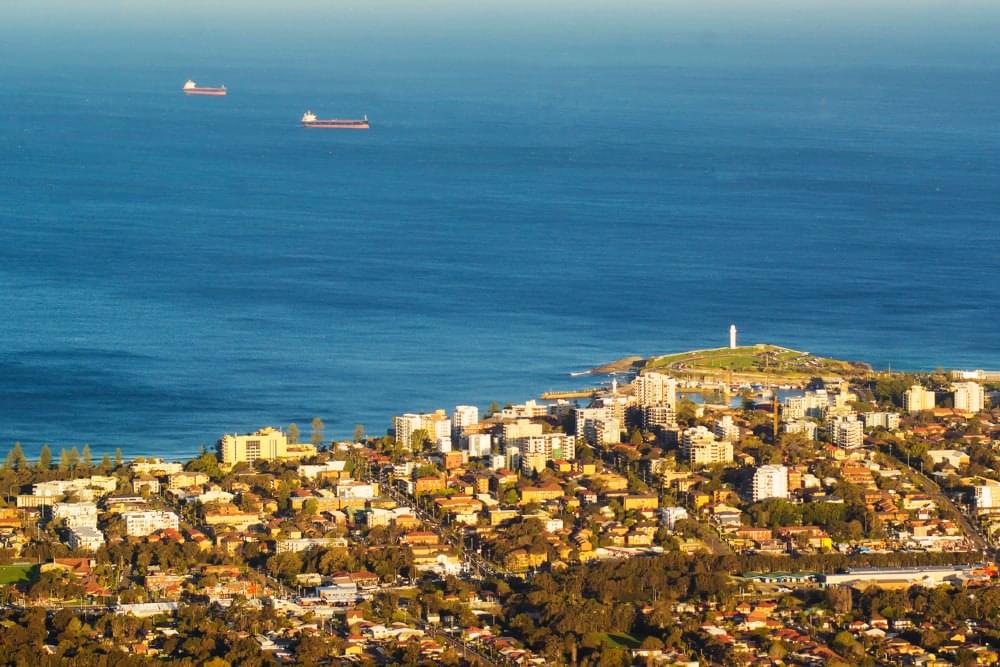
The Illawarra spent several years running hard as an affordable alternative to Sydney, and prices moved a long way. The market has cooled sharply in 2026, and for investors willing to look past that, the conditions are worth understanding.
The reset has been driven by interest rate increases earlier in 2026, higher energy costs, and the May Federal Budget's changes to negative gearing and capital gains tax. Those pressures are real.
What provides support is population growth. Bamboo Routes reports that .id forecasts Wollongong City Council's population at around 225,600 in 2026, rising to 291,800 by 2046, and the Shoalhaven LGA is projected to grow by over 43,000 people by 2041. Supply is constrained by the region's geography, ocean on one side and escarpment on the other, and delivery is lagging. Pulse Illawarra reports that forecast 2026 CBD apartment completions were cut from 840 to 657, and 2027 from 643 to 296. Less new housing being built means fewer properties competing for buyers and tenants.
The rental market is where the numbers are clearest for landlords. Illawarra Mercury reported Wollongong's vacancy rate at just 0.8 per cent in March 2026, with average weekly rent around $698, up +4.7 per cent year-on-year. There is almost nothing available to rent in this region, so finding a tenant is not the hard part. The entry price is.
Buyer sentiment has turned cautious. Advertised stock sat around 11.5 per cent above the decade average by mid-2026, according to Illawarra Mercury, giving buyers more choice and genuine room to negotiate. Auction activity has been thin and well-priced stock is still moving, but the frenzied conditions of earlier years have passed.
A free property report gives you a rundown of any suburb on this list: recent comparable sales, suburb statistics, average days on market and an estimated value, with no obligation.

Wollongong, Illawarra and South Coast property market forecast and price predictions 2026
The most specific Wollongong, Illawarra & South Coast property market predictions for 2026 come from Tim Lawless, Asia Pacific head of research at Cotality. Writing in the Illawarra Mercury in June, Lawless forecast Illawarra dwelling values could fall roughly 5 to 10 per cent in the months ahead, driven by earlier interest rate rises and the May Federal Budget's changes to negative gearing and capital gains tax.
He does not expect the Illawarra median to drop below $1 million. In his words: "The median dwelling value has held above $1 million since March 2025, and to get below that mark, values need to fall about 7.6 per cent, which is probably unlikely." The floor, in his view, is strong population growth and a genuine shortage of new supply, not sentiment.
A separate July 2026 piece in the Illawarra Mercury quotes Lawless again: "we are expecting conditions to slow, possibly even move into reverse through the second half of the year as earlier rate hikes dent demand, investment pulls back and sentiment holds in pessimistic territory."
For wider context, the major banks are forecasting falls across Sydney too, though their figures are for the capital city and do not represent the Illawarra directly. CBA's Housing Update puts the Sydney decline at -6 per cent for 2026, Westpac's Housing Pulse at -3 per cent, and ANZ Research's Housing Outlook at -9.9 per cent. Those three do not agree on the size of the move, and none of them is a forecast for this region.
The first RBA interest rate reduction is not widely expected until the first half of 2027, so borrowing costs are unlikely to ease the pressure here in the near term.
If you are weighing when to act in a market where the outlook is shifting, seeing more of what is actually available before committing is worth the effort.
OpenAdvantage is OpenAgent's buyer network: it gives you early access to thousands of off-market properties at no cost, homes whose owners are ready to sell but have not yet listed publicly.
How we chose the best suburbs in Wollongong, Illawarra & South Coast
OpenAgent's data team ranks suburbs using a scoring model built on sales and rental records. The model is growth-led: 12-month and five-year price growth do most of the work, with days on market, listings volume and rental yield each contributing a smaller amount.
The rankings use sales and rental data for the 12 months to 30 June 2026. Growth figures compare that period with the previous 12 months and the equivalent period five years earlier. Each suburb is ranked on its stronger property type, house or unit.
A few honest caveats: gross rental yield is an estimate based on all properties in a suburb, not only rented ones. Suburbs with fewer than about 20 sales are excluded. Some data points are omitted where figures are too limited to be reliable.
General information only, not financial advice. Figures are estimates and past performance is not a reliable indicator of future results. Always seek independent advice.
Wollongong, Illawarra & South Coast's best suburbs to invest in 2026
Ten suburbs make this list, one unit pick and nine houses. Each is profiled individually after the comparison table. Across the picks, the strongest growth generally comes with thinner yields, and the better yields with more modest recent price rises.
| Suburb | Postcode | Type | Median price | 12m growth | 5y growth | Median rent (pw) | Gross yield |
|---|---|---|---|---|---|---|---|
| Lake Illawarra | 2528 | Unit | $860,000 | +21.4% | +67.0% | $520 | 3.7% |
| Oak Flats | 2529 | House | $1,052,500 | +18.9% | +45.2% | $740 | 4.2% |
| Narrawallee | 2539 | House | $1,400,000 | +17.2% | +52.2% | $675 | 2.5% |
| Warrawong | 2502 | House | $910,000 | +13.8% | +52.9% | $650 | 3.7% |
| Figtree | 2525 | House | $1,290,000 | +17.3% | +47.4% | $780 | 3.3% |
| Port Kembla | 2505 | House | $1,177,500 | +15.9% | +51.0% | $700 | 3.2% |
| Tomakin | 2537 | House | $1,050,000 | +24.3% | +29.6% | $665 | 3.5% |
| Helensburgh | 2508 | House | $1,425,000 | +15.6% | +47.3% | $850 | 3.2% |
| Calderwood | 2527 | House | $1,137,500 | +11.5% | +51.9% | $828 | 4.0% |
| Kanahooka | 2530 | House | $985,000 | +13.2% | +50.5% | $710 | 3.9% |
Source: OpenAgent data.

1. Lake Illawarra 2528
Lake Illawarra sits on the southern shore of the lake it takes its name from, a low-key suburb that has quietly put together one of the strongest long-run growth records in the region. Units here have been the entry point of choice for buyers priced out of Wollongong proper, and that demand has been persistent.
The twelve-month result shows it: the median rose +21.4 per cent to $860,000, which is the lowest entry price of the ten picks, and five-year growth of +67 per cent is the strongest of the ten picks. The trade-off is selling pace. Homes are taking 34 days to sell, five days longer than a year ago, and this is a thin market where listings fell -12.5 per cent over the past year.
- Strengths: Outstanding long-run capital growth and a genuinely accessible entry price for the region.
- Risks and considerations: A small and thinning market where a handful of sales can move the median, and selling pace is slowing.
- Best suited for: Long-hold, growth-focused investors who can accept limited liquidity.
2. Oak Flats 2529
Oak Flats sits between Lake Illawarra and Shellharbour, close to schools and the lake foreshore. Steady owner-occupier and tenant demand, without the premium of a coastal address, is what keeps the yield healthy.
The median rose +18.9 per cent over the year to $1,052,500, and homes are selling in 27 days, three days faster than a year ago. The gross yield of 4.2 per cent is the highest of the ten picks, and listings rose +34.7 per cent over the past year, so buyers have more room to negotiate than twelve months ago.
- Strengths: Strong yield combined with solid recent price growth and improving selling pace.
- Risks and considerations: A sharp rise in available stock gives buyers leverage now but creates a larger pool of competing listings to sell into later.
- Best suited for: Yield-focused investors who want income alongside growth, comfortable with a competitive resale environment.
3. Narrawallee 2539
Narrawallee is a small coastal village near Mollymook on the South Coast, the kind of place that draws both holiday buyers and permanent residents looking for a genuine beach lifestyle away from the city.
Prices rose +17.2 per cent to $1,400,000 over the past year, and homes are now selling in 64 days, down from 95.5 days prior, a -33 per cent improvement. The gross yield of 2.5 per cent is the lowest of the ten picks, and with no prior-year listings figure available, supply trends are harder to read than elsewhere.
- Strengths: A genuine lifestyle destination with solid recent price growth and significantly faster selling conditions than a year ago.
- Risks and considerations: The thinnest rental income on the list, and a data gap on supply trends makes it harder to judge the market's depth.
- Best suited for: Growth-focused buyers comfortable with a modest income return and a longer commute to Wollongong or Sydney.
4. Warrawong 2502
Warrawong sits in the heart of the Illawarra, just south of Port Kembla and close to Wollongong's commercial centre. It is a practical, affordable suburb with solid infrastructure around it, and its price history shows buyers have noticed: five-year growth of +52.9 per cent is the strongest of the nine house picks.
The median reached $910,000, the lowest of the nine house picks, and homes are selling in 28.5 days, down from 34 the prior year. Listings rose +16.3 per cent over the past year, so there is more stock for buyers to look at. The gross yield sits at 3.7 per cent.
- Strengths: The most accessible entry price among the house picks, backed by an exceptional long-run growth record.
- Risks and considerations: Rising listing volumes mean buyers hold some negotiating power, which can work against sellers in a softening market.
- Best suited for: Growth-focused investors who want house exposure at a lower entry point and a long hold horizon.
5. Figtree 2525
Figtree is an established residential suburb on the escarpment above Wollongong, known for good schools and easy access to the university and city centre. It draws consistent owner-occupier demand, which tends to support prices through softer periods, and the housing stock is predominantly freestanding on decent blocks.
The median rose +17.3 per cent to $1,290,000. Listings fell -21.1 per cent over the past year, meaning less stock is on the market, which tends to support prices. Homes are selling in 25.5 days, fractionally quicker than the 27 days recorded a year ago. The gross yield is 3.3 per cent.
- Strengths: Strong owner-occupier demand from a well-regarded suburb with good local amenity, and a tightening supply picture.
- Risks and considerations: A meaningful entry price and a moderate yield mean the investment leans heavily on continued price growth.
- Best suited for: Growth-focused investors with a longer hold horizon who want a well-established suburb with stable demand.
6. Port Kembla 2505
Port Kembla sits on the coast a few kilometres south of Wollongong, with the working harbour on one side and residential streets running back toward open land. Buyers have been following affordability south from Wollongong proper for several years, and the suburb has shifted character gradually as a result.
The median rose +15.9 per cent over the year to $1,177,500, and five-year growth stands at +51 per cent. Homes are taking 42 days to sell, six days slower than a year ago. Listings fell -12.5 per cent over the year, and the gross yield is 3.2 per cent.
- Strengths: Consistent long-run growth in a suburb with genuine infrastructure backing and tightening stock.
- Risks and considerations: Selling pace has slowed noticeably, and this is not a fast-moving market if exit timing matters.
- Best suited for: Patient, growth-focused investors comfortable with a mid-range yield and a longer selling window.
7. Tomakin 2537
Tomakin is a small coastal village about two and a half hours south of Sydney, just north of Moruya. It is the kind of quiet, beach-close place that draws sea-changers and holiday buyers rather than city commuters.
The median rose +24.3 per cent to $1,050,000, the strongest of the ten picks, and homes are selling in 38 days, down from 51 a year ago. Five-year growth of +29.6 per cent is the weakest of the ten picks, and the gross yield sits at 3.5 per cent.
- Strengths: Exceptional recent price growth, backed by tightening supply and notably faster selling conditions.
- Risks and considerations: A modest long-run growth record, and a very small market where a handful of sales can move the median.
- Best suited for: Investors willing to back a short-term momentum story with eyes open to the market's shallowness.
8. Helensburgh 2508
Helensburgh is a tightly held bush suburb at the northern gateway to the Illawarra, sitting close to national parkland and roughly equidistant between Wollongong and southern Sydney. It has a genuine village feel and attracts buyers who want space and greenery without losing reasonable access to both cities.
The median reached $1,425,000, the highest of the ten picks, and the median rent of $850 a week is the highest median rent of the ten picks. Homes are selling in 20 days, down from 28 a year ago, and listings edged slightly lower over the same period.
- Strengths: Fast-moving stock and a location that draws committed, quality-conscious buyers willing to pay for space and setting.
- Risks and considerations: A demanding entry price means the investment is heavily dependent on capital growth to justify the outlay.
- Best suited for: Well-capitalised investors prioritising holding power in a tightly held, high-demand suburb.
9. Calderwood 2527
Calderwood is a master-planned community in the Illawarra's southern corridor, between Albion Park and Shellharbour, with modern estates that appeal to families and younger buyers.
The median rose +11.5 per cent to $1,137,500, the weakest twelve-month growth of the ten picks, though five-year growth of +51.9 per cent shows the longer run has been stronger. The gross yield is 4 per cent, and homes are now selling in 38 days, down from 53 a year ago.
Listings grew +39.1 per cent over the past year, the largest of the ten picks, reflecting new stock as the estate expands. That volume of available stock is worth watching at resale time.
- Strengths: Solid long-run growth record, an above-average yield, and selling conditions that have improved sharply over the past year.
- Risks and considerations: Recent price growth has been modest, and heavy listing volume means sellers face a competitive field when they eventually exit.
- Best suited for: Yield-conscious investors who want modern stock and can accept a slower pace of near-term price appreciation.
10. Kanahooka 2530
Kanahooka is a quiet lakeside suburb near Dapto in the southern Illawarra, close to Lake Illawarra's northern shore and within reach of the freeway north toward Wollongong. It sits in a part of the region where affordability has consistently attracted buyers, and the suburb has a settled, established character.
The median rose +13.2 per cent to $985,000, with five-year growth of +50.5 per cent showing steady long-run gains. Homes are selling in 25 days, marginally faster than the 27 days recorded a year ago. The gross yield is 3.9 per cent, and listings and their year-on-year movement are unavailable for this period.
- Strengths: Steady and consistent growth over five years, with a competitive yield and quick selling conditions.
- Risks and considerations: The absence of listing trend data makes it harder to judge current supply conditions, and recent growth lags most others on the list.
- Best suited for: Income-and-growth investors looking for an affordable lakeside suburb with a reliable long-run record.
The bottom line
The Illawarra is a softer market in 2026, and Tim Lawless at Cotality has put a figure on it: values could fall roughly 5 to 10 per cent in the months ahead. Population growth and constrained supply provide a floor, but this is not a market to enter on momentum alone.
The suburbs that screened well are spread across price points and property types, with a tight rental market running beneath all of them. Entry price and hold horizon matter more here than in a rising cycle.
Explore suburb profiles to dig into the data before you decide.
Is Wollongong, Illawarra and the South Coast a good place to invest in 2026?
The region's long-run case is solid: population growth is real, supply is genuinely constrained by ocean and escarpment on either side, and rents are tight. The short-term picture is harder. Values have started to ease and Cotality's Asia Pacific head of research Tim Lawless has forecast a fall of roughly 5 to 10 per cent in the months ahead. For investors with a long horizon and realistic expectations about near-term price moves, this market still offers genuine fundamentals. For those expecting quick gains, 2026 is a more difficult environment than the years before it.
 - https://sketch.com --%3e %3ctitle%3eicons / icon-chevron-down%3c/title%3e %3cdesc%3eCreated with Sketch.%3c/desc%3e %3cg id='icons-/-icon-chevron-down' stroke='none' stroke-width='1' fill='none' fill-rule='evenodd'%3e %3crect id='Icon-container' x='0' y='0' width='24' height='24'%3e%3c/rect%3e %3cpolygon id='Shape' fill='%2300AB55' points='12 14.3357864 5.20710678 7.54289322 3.79289322 8.95710678 12 17.1642136 20.2071068 8.95710678 18.7928932 7.54289322'%3e%3c/polygon%3e %3c/g%3e%3c/svg%3e)
Should I focus on capital growth or rental yield in this region?
The screen behind this list is growth-led, so the suburbs here were chosen for price performance rather than income. That said, the yields on offer are reasonable: Oak Flats tops the list at 4.2 per cent and several others sit between 3.5 and 4 per cent. If income is your priority, look toward the house picks, where rents are generally stronger.
Is it better to buy a house or a unit in Wollongong, Illawarra and the South Coast?
There is only one unit pick on this list, so a direct comparison has to be read carefully. The nine house picks averaged +16.4 per cent growth over the past twelve months and +47.6 per cent over five years. Lake Illawarra, the sole unit pick, returned +21.4 per cent over the year and +67 per cent over five years, which is comfortably ahead of the house average on both timeframes. That is one suburb's result, not a verdict on units broadly, but it does show the affordable end of the market has performed strongly.
What budget do I need to invest in the NSW South Coast?
Entry prices across the ten picks run from $860,000 (Lake Illawarra units) to $1,425,000 (Helensburgh houses). These are suburb medians, meaning roughly half the sales in each suburb settle above those figures. Most picks sit in the $1,000,000 to $1,200,000 range for houses.
Get a free property report to see recent comparable sales and an estimated value for any suburb on the list before you commit.
How did OpenAgent choose these suburbs?
The picks come from a growth-led screen applied to sales data across the region over the twelve months to June 2026 and over five years. The full details of what the model measures and its limitations are explained in the methodology section above.